Monday, 19 September 2022

#RWAus22… Baby, we’re BACK!

Over a month ago now, #RWAus22 wrapped up in Fremantle and, as usual, I’m only now getting to wrap my head around the absolute whirlwind that was our first fully national, in-person conference in THREE YEARS! #RWAus19 in Melbourne was SO LONG AGO!

This year, I’m blogging my takeaways for Breathless in the Bush, and those takeaways can, for me, be grouped into three main headings: Decisions, Consequences, and Character.

Check out why these three headings below.

#1 Decisions

International guests Becca Syme and Zoe York both talked at various times about decisions, and how those decisions then impact on writing, and writing careers.

One of the fundamental skills Becca teaches is to ‘question the premise.’ I can hear you all asking what that means, so, to illustrate, here’s an example from Becca’s book, Dear Writer, You Need to Quit (which I have bought in actual book form, read twice, highlighted and it now lives on my desk):

Good writers write every day.

But, do they?

Here’s another one:

You can’t edit a blank page.

But, can’t you? (And, sorry to all the La Nora Stans who are stoning me in their heads right now for challenging this one. I love La Nora too, promise)

Becca’s whole perspective is about finding what works for you, given your particular bundle of strengths and characteristics and ways of doing things. To stop making decisions about how you do things based on how OTHER people do them and make decisions that WORK FOR YOU. And, if you want more about that, check out Dear Writer, You Need to Quit by Becca which is an easy, and FABULOUS read.

Similarly, Zoe also talked about not just doing what everyone else is doing and thinking that will build your career. She talked about not seeking ten-word answers (i.e. the easy answer) but asking better questions (see the three minute scene from The West Wing here which explains this way better than I can, and you can watch the BRILLIANT Martin Sheen doing the BRILLIANT, albeit pretend, Josiah Bartlet). She also talked about questioning the goals of the person giving you advice and making sure that their goals align with your goals before making the decision to TAKE the advice.


#2 Consequences

Following on from Decisions – we have consequences.

Another message I took away from the conference was to be aware of where I expend my energy.

Becca uses the idea of energy pennies to illustrate this idea: imagine you have a finite number of energy pennies to use for each day, and every decision you make expends a certain number. One penny when you decide what you have for breakfast, twenty to process all the negativity when you start scrolling through Facebook or Twitter, even more when you start fighting with posters, whether online or in your head.

The limited number of energy pennies you have is why you need to make good decisions! You don’t want to be expending energy on decisions that aren’t the right decisions for you, or for your writing career.

#3 Character

And then, decisions and consequences come together in your CHARACTERS!


We were lucky enough to get a two-fer when Maisey Yates and Jackie Ashenden presented their Driven by Character session. Maisey and Jackie are both great - #BFFGOALS – and they talked some about the push/pull of decision and consequence as driving characters along.

They also talked about those decisions and consequences having to be in accordance with the character’s character (i.e. what makes them them), and those decisions and consequences having to have emotional ramifications.

You know, it all sounds so easy when I write it in one little paragraph but… This stuff is hard, and this session was a great reminder.


And, finally, the Award Winners

Last, but not least, CONGRATULATIONS to all of the RUBY award winners for 2022 (list here at the end of Amy Andrews’ latest Booktopia blog), and to the EMERALD (Carrie Clarke) and SAPPHIRE (Tanya Nellestein) award winners.

If you were there, tell us below what were your take aways from Conference? If you weren’t there, do any of my take aways resonate for you?


Kristine Charles writes sexy tales where coffee (and red wine) is abundant, designer shoes and handbags are cheap, chocolate has no calories, and men always put the toilet seat down. Find her at www.wordsbykristinecharles.com or on Facebook, Twitter and Instagram. You can also get her latest - Catch and Kiss - in the It's Always Been You charity anthology (proceeds to breast cancer research) here.


LOVE TO LOVE: the book I’m reading, Ainsley Booth’s PRIME MINISTER, book one in the Frisky Beavers Series (Ainsley is also Zoe York!). This book is fabulous!

LOVE TO LAUGH:
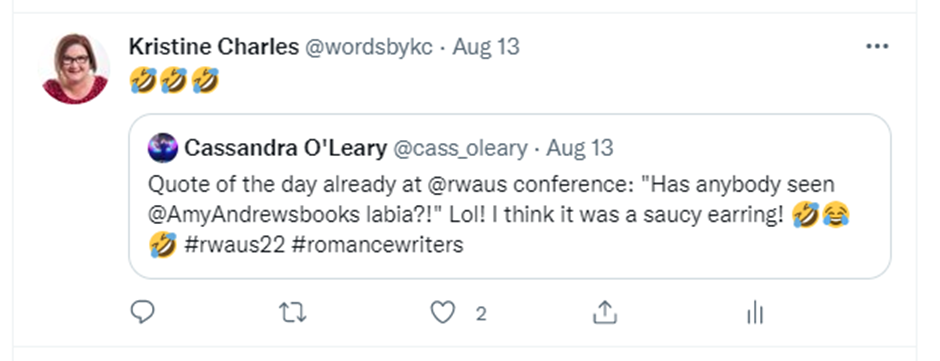
LOVE TO LEARN: From Becca Syme. Her Write Better-Faster courses, and Need to Quit books are the BOMB!

Monday, 8 August 2022

What is the Grand tour?

By Cassandra Samuels


With the exciting news that the next Bridgerton series (3) on Netflix will focus on Penelope and Colin I thought I would talk about The Grand Tour. In the first series, Colin goes off to do his grand tour where Pen writes to him faithfully while he is away. Although the "Tour" was not specific to the Regency period it was important to the men of the upper classes to gain maturity and experience through travel.

The Grand Tour was a time for privileged young men to travel abroad and gain an education that could not be found in books or the hallowed halls of Cambridge and Oxford.


 Emil Brack - "Planning the Grand Tour" by Marcus, GK
                                                                                                                                                                                                                           

The tour was usually undertaken by young men and their tutor. They would travel to such places as France, Italy, Portugal, Switzerland, Greece and sometimes, if one was particularly keen, even as far as Africa and Egypt. Although some women were known to also travel broadly during this time they would not have had the same freedoms as men.

A young charge and his tutor
(or Bear-leader)


The whole idea of the tour was for young men to have the opportunity to travel and learn about the different cultures, languages and history of the places he visited. This would give him extra polish and a certain sophistication that was necessary to form character before taking on the daunting task of the family responsibilities - such as running an estate. It would also give them an edge over others in society who could not afford a Grand Tour.
 
CC - The Parthenon

This jaunt abroad could last anywhere from two to four years and cost his family a fortune. This was not generally seen so much as a burden but as the finishing touches of a young man’s necessary education.

Gentlemen would return laden down with art collected on their journeys. Often the paintings would be portraits of themselves in front of historic landmarks to record their time away. They would also send back keepsakes such as rugs, furniture and antiquities. 

William Beckford's 1780-1781 Grand Tour through Europe shown in red


Although the Grand Tour was made more difficult during the Napoleonic Wars, as soon as it was safe to travel again, young men flocked back to the continent and beyond in search of education and adventure. However, with the invention of the railway, travel became easier and more affordable for people of lesser means, and so the elite exclusivity of the Grand Tour was all but lost.

"Canaletto - View the Arch of Constantine with the Coliseum [1742-45]" by Gandalf's Gallery is licensed under CC BY-NC-SA 2.0.   
This may all sound delightful but there were many dangers to be encountered when travelling abroad. A young man was likely to have his money stolen (if not his life), become infected by some kind of sexually transmitted disease, fevers and other nasty ailments and sometimes even kidnapped for ransom. However, this did not seem to stop many young men from taking the treacherous journey across the sea (which was a risk on its own) in search of enlightenment. 

Instead of taking bags of blunt with them, most would travel with letters of credit, which they would present at the major cities – a little like travellers cheques so that they only carried around the coins necessary to pay for food and lodgings. They also often carried letters of introduction as well, so that they could integrate into the local aristocracy.


Courtesy of wikimedia commons


Later in the Victorian period, travel abroad was more often taken by families and young women with an artistic bent or an adventurous spirit. They were encouraged to spend time in Italy and France admiring art and culture in all its forms. (See the movie, Room with a view for an example of this sort of travel.)

Of course, the world seems so much smaller now than it was then. With the advancements in air travel and the infinite resources of the Internet, you can travel and learn about other cultures from the comfort of your armchair, but it can never quite replace the thrill of seeing those sites in person.

If you could have done a grand tour during your early adult years where would you have gone first?

Love to Love having my daughter relocate back home with us.

Love to Laugh at the TV show HaveYou Been Paying Attention

            Love to Learn about History in all its forms - I just wished we learned from it as well.


Monday, 11 July 2022

Plotter or pantser?

Ways of writing 

By Sharon Bryant

How do you approach your writing? Are you a plotter who creates a detailed outline before you begin your novel? You may be a pantser who prefers the more organic approach of not knowing where a story is going when you begin to write it. Perhaps your approach to writing lies somewhere between these two extremes. 
Plotters often consciously utilise the structure of a romance novel when they are in the planning stage. They may make detailed notes re their characters, settings and plot lines. Some will use cards to summarise the key events in each chapter as they plot out the hills and valleys of their stories. Many story problems can be identified in the planning stage using this approach. Plotters may also know their characters well before they start to write. This can result in producing well-rounded characters who the reader can relate to. 
Pantsers may dislike detailed plotting, finding it stifles their creativity. Instead they allow their story to develop organically. If they reach a dead end, they go back, identify the problem and rewrite as needed.
pixabay.com.au

Which approach is the best? 

I don't believe one approach is better than the other. Both have advantages and disadvantages. 
Plotters know their destination. This may make it more likely for beginning writers to finish a novel without getting lost on the way. If you prefer not to write your novel from start to finish, plotting may help you link different scenes together. It may also allow you to avoid extensive rewriting. 

Of course, the plotting approach has disadvantages. You need to put in a lot of work before you begin writing your novel. Plotters may spend so long in the plotting stage, that they find it difficult to begin writing. Some plotters lose confidence and leave a project without starting their actual novel.
pixabay.com.au

Pantsers have the freedom to just begin writing, and take their story wherever they wish. They spend more of their valuable writing time, immersed in the writing process so it may be easier for them to develop their own voice. This immersion may aid the creation of well-developed characters. 

On the other hand, pantsers may write themselves into a corner, and become blocked, uncertain where the story should go next. Some writers find this very frustrating. They may also find it more difficult to write when inspiration doesn't strike. 


pixabay.com.au

 How do you approach your writing? 

There is no one correct way to go about writing your novel or short story. Your approach will be as individual as you are. How do you write? Are you a plotter, a pantser or somewhere between? 

I love to love thinking about what I may write. 
I love to laugh with my writing friends. 
I love to learn more about the process of writing.