Showing posts with label Kate Forsyth. Show all posts

Monday, 11 February 2019

Online Writing Courses or Classroom-based Sessions?


by Marilyn Forsyth

Image courtesy of giphy

Wherever you are on the journey from aspiring writer to established author, you'll know the importance of continually striving to improve your writing.


I’m an emerging author, constantly on the lookout for courses that deal with different aspects of the writing craft/business, not just for that ‘professional training’ aspect, but because there’s a sense of personal fulfilment in completing them that I really enjoy. Over the last few years, I’ve enrolled in a number of both online and classroom-based courses. Here are a few of my thoughts.


Image courtesy of Pixabay

Online courses are, apparently, on the rise, and it’s easy to understand why. They offer flexibility and convenience for those of us who work day jobs and/or have family commitments. You can work at your own level and pace at a time that suits you. However, from my experience, you really do need to schedule a time to work on assignments (and make sure that you schedule enough time).


I dropped out of one course I did with Margie Lawson’s Writer’s Academy when ‘life’ intervened; I wasn’t in the right headspace and just couldn’t keep up. (Bye-bye $100 bucks!) Having said that, though, no one can predict life dramas, and the other two courses I did with Lawson’s Academy were absolutely brilliant. The assignment feedback from each of the mentors, and other enrollees, was invaluable.


Another couple of suggestions:

Image courtesy of giphy
✻Keep copies of all assignments you submit

✼Organise those Assignment files in a way that suits you (and work it out beforehand)

✼If you have a tendency towards procrastination, or have motivation that ebbs and flows, an online course is probably not for you

✻Also, ensure that your computer is working well – nothing is more frustrating than dealing with technology issues when you’re on limited time.


The Romance Writer’s of Australia OWLs (Online Writing Lessons) are fantastic. (Check out the schedule for 2019 here.) I’ve done a couple and found them very worthwhile. They cover a huge range of topics and are very reasonably priced at $55 for RWA members ($88 for non-members). Our writing group completed Cathleen Ross’s very practical Self-publishing for Beginners, which enabled us to publish our Christmas Anthology.


One thing I have found difficult with online courses is that there is (usually) no instant clarification of concerns. Being able to read back over lectures (or Pause/Rewind on videos) is helpful, as is the presence of a chat room, but this is where classroom-based courses come into their own.


Learning in a group is fun!


There’s nothing quite like being in a ‘real’ room with other like-minded people, discussing a topic you’re all enthusiastic about. The spontaneity of discussion that comes with being in a face-to-face group provides so many fabulous learning opportunities.


There’s also something about being in a classroom that enables you to keep your attention focused (so much more effectively than watching a video or reading through a lecture on your own at home – or is that just me?? 😕).


I’ve heard good things about Writing NSW courses, with top-notch presenters from among our best-known Aussie authors. The wonderful Anne Gracie has a one-day course in May, Romancing the Page.


The Australian Writer’s Centre (North Sydney) offers both online and classroom-based courses. I have no experience with their online courses, but the classroom-based Blogging for Beginners was the starting point for our Breathless Blog. I’m also very excited to say that I’ll be attending History, Mystery and Magic in March, a two-day course with Kate Forsyth.

Can’t wait!

Last, but not least, Daily Writing Tips has an interesting review of James Patterson's Masterclass here.


Do you invest in your writing by doing courses? Do you prefer online or classroom-based sessions? Do you have any writing-related courses you’d particularly recommend?

Love to Love the sound of rain (it's been so damn hot this summer!).


Image courtesy of giphy
Love to Laugh at puns at Nerdy FunPun.


Love to Learn all about History, Mystery and Magic with Kate Forsyth.


Monday, 22 October 2018

Author Spotlight - Kate Forsyth

Called 'one of the finest writers of this generation', she admits she writes, reads and daydreams. Please welcome Kate Forsyth!


Bio

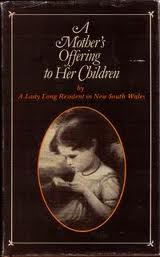
Kate Forsyth is a best-selling, award-winning author of picture books, poetry, fantasy novels for children and fairy tale retellings for adults. She has a doctorate in fairy tale retellings, a BA in literature, an MA in creative writing. She is the only author to win five Aurealis awards in a single year, and she's a direct descendant of Charlotte Waring, the author of A Mother's Offering to her Children, the first book for children ever published in Australia.  Kate lives in a seaside area of Sydney, Australia, with her husband, three children, a rambunctious Rhodesian Ridgeback, a bad-tempered black cat, and thousands of books. You can contact Kate on Twitter: https://twitter.com/KateForsyth, on Facebook: https://www.facebook.com/kateforsythauthor, on her blog: http://www.kateforsyth.com.au/kates-blog, and through her website:  http://www.kateforsyth.com.au


What is one must-have when you are writing?
A big cup of tea!

What are you reading at the moment?
A Honeybee Heart Has Five Openings by Helen Jukes

Name one thing you're scared of?
Failure.

Like to share something that recently made you happy?
I signed a contract with the National Library of Australia to write a book with my sister, Belinda Murrell. We are co-creating a bibliomemoir inspired by the life of my great-great-great-great-grandmother Charlotte Waring Atkinson who wrote the first children's book published in Australia.

Image courtesy of: kateforsyth.com.au

Like to share an embarrassing moment?
A few weeks ago I was at the Bendigo Writers Festival and was coming out of the auditorium to a big queue of people waiting for me to sign their books. My foot caught in the tablecloth, the table collapsed and I fell flat on my face in front of dozens of people. I hurt my foot and my pride.

Who is your favourite literary crush?
At the moment, it's Sarah Waters!

If you were the main character in your favourite book, who would you be?
Emily Starr, the heroine of L.M. Montgomery's series which began with Emily of New Moon. It was the first book I ever read about a girl who wanted to be a writer and I badly wanted to live on Prince Edward Island.

What is the premise of your latest book?
Beauty in Thorns tells the story of pre-Raphaelite artist Edward Burne-Jones and his lifelong obsession with the Sleeping Beauty fairy tale which led him to create a quartet of extraordinary paintings which became the most celebrated art of the late 19th century. It is a story of love, desire, betrayal and forgiveness told in the voices of four women who most inspired him, including his wife Georgie - the model for the first and last Sleeping Princesses - and his daughter, Margot, the model for the most famous.


What unique challenges did the book pose?
The Pre-Raphaelites are such a fascinating group of people - there were just so many wonderful stories, I had to pick and choose carefully, focusing on my core story. I still wrote far too much, and had to cut it back very hard. A very challenging book to write but so rewarding.

What are you working on at the moment?
I am working on a new fairy tale-infused historical novel for adults called The Blue Rose. It is set in Imperial China and France during the French Revolution and was inspired by the true story of the quest for a blood-red rose.

Image of 'The Blue Rose' - old fairy tale set in China - courtesy of: kateforsyth.com.au
What is your writing schedule? 
I work most days, but there is a lot to do besides writing - administration, answering emails, doing interviews. Monday is my admin. day, then I write Tuesday, Wednesday and Thursday. I often have a half-day on Fridays, work most of Saturday, and then catch up on my reading or do different types of writing on Sundays (i.e. poetry, short stories, essays). I walk the dog in the morning and then work through to around 4:30 pm when my kids get home from school and I have a little break. Then I work through until around 6:30 pm when I cook dinner. If I'm writing well, I go back to it after dinner - but usually I read in the evenings.

Are you a plotter, pantser or somewhere in between?
I don't like this term 'plotting v. pantsing' as it is divisive and sets up two equally important and valuable writing tools as binary opposites when, in truth, both can work together to help you discover your story. I plan my overall narrative arc carefully, and like to create a simple chapter outline, but there is always room for new ideas and inspirations. The plan changes as I discover my story, and sometimes I need to adjust my early ideas quite significantly. Often I know what needs to happen in a chapter, but have no idea how to make it happen on the page. I love free associative writing as it often sparks new ideas, but whenever I am stuck, having a plan can really help me see my way forward.


What do you love to love?
I love to write and read, obviously, but also to walk in a place of natural beauty, to work in my garden, to cook, to listen to music, to dance, to go to the theatre, to travel the world.

What do you love to laugh at?
My dog makes me laugh every day.

What do you love to learn about?
Each new novel I write teaches me something I did not know before. I learn so much, it astounds me. Not just about the time and place my story is set in, but also about writing and myself.


Monday, 2 October 2017

Tales from the Past Part Five: Rapunzel Stories

By Sharon Bryant

The Rapunzel Story


Rapunzel is one of the fairy tales in the Brothers Grimm collection initially published in 1812. It is very similar to an Italian tale, Petrosinella, published in 1634. Rapunzel storylines are infrequently used in romance novels, perhaps owing to difficulties incorporating some elements like Rapunzel’s very long hair. Rapunzel affords opportunities to explore themes such as innocence, jealousy and the consequences of poor judgment.
pixabay.com.

Once Upon a Tower

Once Upon a Tower by Eloisa James contains echoes of the Rapunzel story. We meet Gowan, Duke of Kinross for whom “Fishing for a bride had taken precedence over fishing for salmon.” He likes to be in control and asks for Edie’s hand in marriage thinking she is the most serene woman he has met. However, Edie is in fact passionate and independent of spirit. Both characters have trouble expressing their feelings and must find a way to broker their increasingly tempestuous relationship.


Cress

In Cress, The Lunar Chronicles Book 3 by Marissa Meyer, Cress is trapped on a satellite and forced to follow the instructions of Sybil who reports to Levana, the evil Lunar Queen. Captain Carswell Thorne is part of a group of rebels led by a cyborg who hope to defeat Levana. The group attempts to rescue Cress. Cress has researched Thorne from her satellite home, and thinks she is in love with him. This action-packed space adventure contains elements of romance.


Bitter Greens

Bitter Greens by Kate Forsyth tells the story of Charlotte-Rose who enters a convent in her forties because this is the will of the king. While she is there, she hears the tale of Margherita who was trapped in a tower by a witch, and of Lucio, the young man who discovers her.

Do you notice any elements of the Rapunzel tale in the romance novels you read? Which elements like best?

I love to love: Our eldest daughter is getting married on Saturday. We are so excited.

I love to laugh: We’ve just returned from overseas. We had the most wonderful night chatting with our host in Galway.

I love to learn: Travelling overseas is the best. You learn so much.

Monday, 11 September 2017

What I Loved About the Historical Novel Society Australasia Conference


 by Marilyn Forsyth

Image courtesy of HNSA

I just spent the most fabulous weekend at the Historical Novel Society Australasia (HNSA) conference in Melbourne. It was the first one I’ve attended and I assure you it won’t be the last. Sadly, the next isn’t until 2019, but at least it gives me plenty of time to save up 😊.


The selection of sessions, practical workshops and academic sessions was absolutely sensational (the only problem being that there were too many choices)! Everything you could ask for, from being allowed to heft pieces of medieval armour to listening to a panel of feisty romance authors vent their ire at the proposition that romance is written to a formula.


Lisa Chaplin’s From Elevator Pitch to Finish proved to me yet again what a wonderful author and teacher Lisa is. I attended her Deep POV workshop some years ago and it was shortly after that that my debut novel The Farmer’s Perfect Match was accepted for Harlequin’s MIRA line (due in no little way to Lisa’s suggestions, I’m sure). Fingers crossed, I now have the perfect pitch for my current wip.

I found out from the panel discussing Bio Fiction: Can You Defame the Dead? that according to Australian law, no, you can't defame the dead, or their descendants. Handy to know for those Aussie writing historical fiction.


The Outlander Effect: Parallel Narratives was of particular interest because my latest work is a time-slip novel. Ella Carey, Felicity Pullman, Belinda Murrell and Gary Crew gave some great insights into how to bring a dual timeline novel to life while maintaining the authenticity of both timelines and their characters' stories.
Looking like a dag


Having missed out on the Weapons session at last month's RWA conference (clashing sessions), I was so pleased to be able to attend the session on Armour with Matt Curran. I was able to get a tangible feel for the medieval past by trying on a chainmail hood and a twelfth century Norman helmet (recreated).


The discussion about the difference between historical romance and a historical love story was a lot of fun. The panel, consisting of Lisa Chaplin, Anna Campbell, Isolde Martyn, and Alison Stuart, presented a lively and entertaining discussion with a lot of laughs. 


The panel discussing Authenticity vs Truth: Does Historical Fiction Need to be Accurate? was interesting, but without arriving at a definitive answer, of course. There will always be those who believe that historical fiction should serve the narrative versus those who believe writers have a moral obligation to get the facts of history correct (even in fiction).

Photo courtesy of Jel Cel (HNSA)


I’m lucky enough to have had two books published (in a different genre to historical fiction), but there was so much I wasn’t aware of with regard to the process. Thank you to the panel of Pathways to Publication for outlining the different reasons why mss may not make the cut.


The last session, Writing Outside Your Comfort Zone: Sex and Violence, provided a lively conclusion to the conference. Thanks to Kate Forsyth, Anna Campbell and Luke Devenish for the laughs.

Over the weekend I also got to have a coffee with one of my all-time favourite writers, Juliet Marillier, and to actually meet the fabulous Anna Campbell for the first time in person. Talk about fan girl moments! Loved the way these ladies took the time to talk to their biggest fans (i.e. me :D).


Photo of Juliet Marillier meetup courtesy of Denniel Allysha
I love the conference experience! The interaction between writers of all levels is wonderful to be involved in. Needless to say, I've been totally inspired and can't wait to get back to my story with a heap of fresh ideas for finishing it off. (But I will miss Melbourne - despite the cold.)


What has been a memorable conference workshop you've attended? Would you rather interact or sit and listen to an expert?


Love to love meeting up with Facebook friends in person. I met a few Word Count Warriors for the first time - lovely to be able to put real faces (as opposed to Facebook photos) to names. Plus, I also unexpectedly ran into an old school friend - such a lovely surprise!

Love to laugh along with Anna Campbell's infectious laugh.

Love to learn about the concept of a 'sensitivity reader'. If you have a sensitive issue in your novel, it's a good idea to have an expert on the issue read your book to advise if your treatment of it is authentic. An example might be that if your book delves into the treatment of our Indigenous peoples in the past, your sensitivity reader should be an Indigenous person from the area you write about (the reason being that it's disrespectful for an Aboriginal person from one area to talk about the culture of an Aboriginal group from another area). I'd never heard the term before, but it makes sense to me.

Monday, 21 August 2017

RWA Conference Round-Up: Love Gone Wild. Yes, absolutely!

by Enisa Haines


It's August, the month when RWAustralia entices romance writers to their annual Romance Writers Conference. And entice writers they did, this year to the gorgeous Pullman King George Square Hotel, Brisbane.

Image courtesy of: image.leisurecom.com


The RWAustralia Conference is that wondrous time when bestselling authors reveal their paths to publication; where writers attend workshops focused on the craft of writing, or take the opportunity so generously given to pitch their stories to an agent or editor. It's the time when writers gather together, old friends mingling with new, and celebrate their love of the romance genre.

The Bring Out the Animal in You Cocktail Party was fun, fun, fun. Especially the costumes!


As always, the keynote speakers grabbed my attention. Marion Lennox and Kate Forsyth were so emotive, so inspiring. Equally valuable were the workshop sessions. A variety of topics, each aimed at educating. I was reminded of things I already knew and learned a lot more. 

Some unforgettable quotes:


Marion Lennox - RITA Award-winning author:
Photo courtesy of: Joanne Boog


"Every day I sit at my computer and imagine people in my head."
"At times writing is easy. Often it's not. Protect your magic."


Kate Forsyth - Aurealis Award-winning author:


"Books are magic. They transport you to other worlds where for a while you travel the journey of other characters."


Ally Blake - Harlequin Mills & Boon author:

Image courtesy of: allyblake.com

"Show up. Show up. Show up." And after a while the muse shows up, too."
"If it isn't beautiful or functional, lose it!"
"Do not write 'The End' until the book is finished!'


Chris Taylor - indie author of romantic suspense:
Image courtesy of: christaylorauthor.com.au

"Choose a character's past with care, one that they can get over."


Lauren K McKellar - author and editor:
Image courtesy of: goodreads.com

"Page-turning quality is reader magic."


Liz Pelletier - Founder, Entangled Publishing:
Image courtesy of: midwestwriters.org
"The key to crafting a bestseller is entertainment."
"Tell a story readers want to hear."


Inspire. Entertain. Create magic. Every speaker I listened to, every workshop I attended, those were the messages I received, and will nurture as I now look back on the conference as a wonderful memory to treasure as I write.


Do you love attending writers' conferences? Do they fill you with inspiration?


Love to love - beautiful dancing at the Butterfly Ball Gala Awards Dinner


Love to laugh: at funny animal snaps.


Related image
Image courtesy of: chelseadogs.com

Love to learn: all about writing, both serious and fun!


Monday, 13 March 2017

Tales From the Past: Beauty and the Beast

Romance Novels and Fairy Tales Part 1


Many romance novels are based on fairy tales. For example, Pride and Prejudice and Jane Eyre have similar themes to Beauty and the Beast.

Fairy tales date back thousands of years and have similarities across cultures. Some psychologists think fairy tales span time and place because they relate to essential dilemmas we all grapple with, life lessons many of us learn, and basic truths about what it means to be human.


What message lies behind the Beauty and the Beast story?


Josh Gressel argues Beauty and the Beast imparts the essential message, we must learn to love and accept those parts of ourselves we dislike, and experience as “beast-like”. Beauty needs to find what is beautiful in the beast, and the beast needs to accept that his issues are part of him, and to learn to cope with them. Only then can they find true love.

Fairy tales appeal to children and adults because of the essential truths they impart.
Many engaging, well-written, recently published romance novels use a Beauty and the Beast theme.

https://cdn.pixabay.com/photo/2014/04/10/11/24/red-rose-320868__340.jpg


Some Beauty and the Beast romance novel page-turners


In The Hating Game by Sally Thorne, Lucy comes to realise Josh's sometimes difficult behaviour stems from shyness, and failure to deal with major issues from his past. She falls in love with his caring nature and masculine vulnerability, and can accept his flaws, once she understands him better. Josh must learn to accept his personality in its entirety, and realise he can fall in love, and be loved in return.

https://images-fe.ssl-images-amazon.com/images/I/514sa3HcecL.jpg 

Kate Forsyth writes of Ava's growing understanding of her husband Leo in The Beast's Garden. Her fear of her husband changes to fear for him when the Valkyrie plot fails, he is arrested and sentenced to be executed. This intriguing, page-turner is filled with romance and suspense as the tale of Beauty and the Beast is retold in a Nazi Germany setting.

https://cdn.penguin.com.au/covers/400/9780857980410.jpg

When Beauty Tamed The Beast by Eloisa James is a delightful, historical novel with a Beauty and the Beast theme. Both hero and heroine must learn to accept the flaws in themselves, and in each other before love can triumph.

https://images-na.ssl-images-amazon.com/images/I/51rRP97aHkL.jpg

What is your favourite Beauty and the Beast romance? What do you think is the central message of the Beauty and the Beast tale?


I love to love:   

Friday night dinners out with my husband are the best part of my week.

I love to laugh:   

Sally Thorne's humour in The Hating Game is the best.

I love to learn:   

I think much of life is about learning and personal growth. Sometimes challenging, often fun.

Monday, 2 May 2016

Newbies Corner: Show Don't Tell


with Sharon Burke

Fiction writing courses and “how to” books frequently advise novice authors to show rather than tell. Doing this effectively is a great challenge for many new fiction writers, and a necessary precursor to publication.


Showing what your characters are going through brings your writing to life and enhances your readers' emotional experience.


There are several ways to achieve this.

Use more dialogue: Could some of the narrative sections in your novel or short story be rewritten as dialogue? Dialogue has immediacy and power. It helps your readers feel they are witnessing the scene you created.


For example, in Outback Dreams, Rachel Johns could simply have written Faith told Monty's mum, Monty was pursuing Ruby Jones. Instead Rachel captures our interest with animated dialogue, letting us know this information together with Faith's low opinion of Ruby: ''Monty barely stops work long enough to meet eligible women, and anyway, the only one he's shown any interest in recently is princess Ruby Jones.''


Use descriptive and sensory language: Using narrative to describe your viewpoint character's emotions with language linking these to the five senses helps your reader vicariously experience what the character is going through.


In The Beast's Garden, Kate Forsyth uses sensory and highly descriptive language to describe what the heroine experiences as she races towards a burning synagogue:
Shards of glass littered the road. Someone was painting “Jew” in bloody red letters across the wall. Someone else was beating and kicking a bundles of old rags in the gutter. Ava saw an arm flop. She caught hold of the window-sill, suddenly unable to take a breath.


Be more specific: Take the time to analyse novels from the sub-genre for which you are aiming. Notice the degree of detail and type of language the author uses to show rather than tell. Try rewriting some scenes from your own work applying what you have learned.

Are there times when you should tell rather than show with your writing? When is telling rather than showing most appropriate?


I love to love: I'm going to the ballet with my Dad tonight. I can't wait to spend the evening with him.


I love to laugh: A new series of the ABC comedy Upper Middle Bogan is currently being filmed. I'll either be glued to the television or buying a boxed DVD set. Probably both.


I love to learn: We did a marvellous novel plotting exercise in our writers' group last month. I learnt so much, and will definitely use these techniques again.